Complying with state, federal and international regulations is of the utmost importance for us at Nelco. But these rules also impact you as you work with and order parts and materials from around the world, so understanding what’s allowed and what isn’t is vitally important.
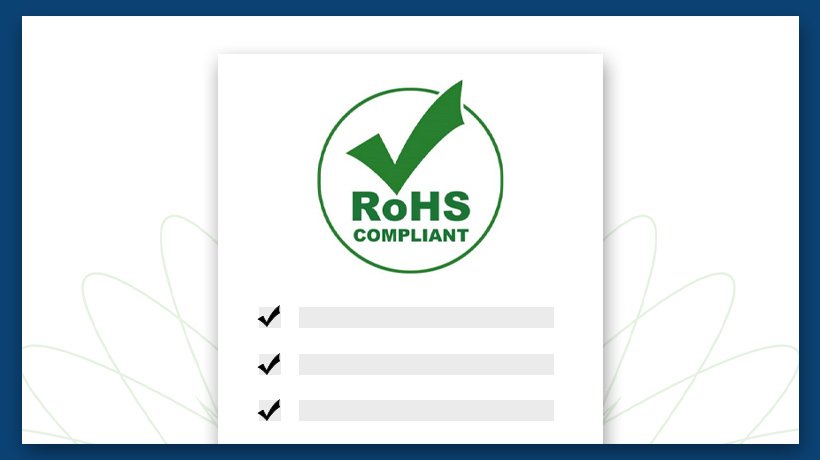
One of the most relevant hazardous materials regulations that everyone should be aware of is RoHS. Here is a quick guide to RoHS, RoHS compliance, and what and how these materials are regulated.
What is RoHS?
RoHS refers to the
Restriction of Hazardous Substances Directive, a set of regulations passed in the European Union pertaining to electronics and hazardous materials. Specifically, these regulations state that all electronic equipment must be manufactured with no more than a trace amount of mercury, lead, cadmium, hexavalent chromium, polybrominated biphenyls or polybrominated diphenyl ethers. This makes the equipment safer for consumers who use them as well as for the environment as a whole.
The initial RoHS regulations went into effect in 2006, but since then further stipulations have been added, resulting in new regulations known as RoHS 2, RoHS 3 and RoHS 5/6. All variations of RoHS mean essentially the same thing, but each has its own level of stringency.
- RoHS 2 – expanded the initial interpretation of RoHS and includes all electrical/electronic equipment, cables and parts. Companies must have achieved compliance by July 22, 2019 at the latest.
- RoHS 3 – after RoHS was implemented, RoHS 3 added new banned chemicals and substances to the list of restricted materials.
- RoHS 5/6 – speaks to compliance on 5 out of the 6 originally banned substances. Lead has certain exemptions under very strict parameters.
When was RoHS Adopted?
Beginning in July 2006, all companies in EU member nations agreed to abide by these rules. It is estimated that 99 percent of all companies have adapted and adhered to these rules without issue. Highly effective training programs combined with aggressive law enforcement have been credited with the high levels of compliance.
Why is RoHS Important?
Products with a high level of lead, mercury and/or polybrominated biphenyl were found to be linked to an increased occurrence of cancer. Although these substances were used to prevent overheating, coat wires and create semiconductors, RoHS standards specify a maximum concentration per product to make them safer for the public.
Additionally, these chemicals are incredibly hazardous for the environment. When not properly disposed of, electronics with these materials end up in landfills, allowing chemicals to seep into the ground and potentially into water systems. This poses a health risk to the human population and even animals.
RoHS-Regulated Materials & Testing Practices
There are six primary chemicals that are regulated under RoHS. They are:
- Lead: Found most commonly in batteries and computer monitors
- Mercury: Found in fluorescents, thermostats, some fuel cells and circuit boards
- Cadmium: Common in alarm systems, indoor sprinklers, specialized batteries and some plastics
- Hexavalent Chromium: Widely used in photography, paints and the production of plastics and stainless steel
- Polybrominated biphenyls: This chemical makes things flame retardant and is also used in home appliances
- Polybrominated diphenyl ethers: Common in household electronics
RoHS compliance does not mandate 0-levels of all of these chemicals – there is a limited safe range that is permissible. For lead, mercury and cadmium, it’s 100 ppm, but hexavalent chromium, polybrominated biphenyls and polybrominated diphenyl ethers have a limit of 1,000 ppm.
According to the
RoHS guide, products are tested using “portable RoHS analyzers, also known as X-ray fluorescence or XRF metal analyzers. These are used for screening and verification of the restricted metals. With the advent of RoHS 3 and the four added phthalates, different testing is needed to ascertain levels of these compounds, which are extracted with a solvent.”
How is RoHS Compliance Enforced?
It is possible that legal action can be taken against a company that makes the non-RoHS-compliant product as well as the manufacturer and retailer that sells the product. Complaints can be made to various legal boards in the EU as well as to private lawyers in the EU. Companies that are brought to court must prove that they took all possible steps to be in compliance even if products were made in non-RoHS countries.
While there is no way to completely eliminate all risks of using electronics,
RoHS laws make it easier to keep people as safe as possible.
Are RoHS and WEEE Related?
This is a frequently asked question about RoHS compliance, and the short answer is yes, they are related. WEEE stands for the
Waste Electrical & Electronic Equipment directive, which regulates what happens to electronics after they are produced. Essentially, RoHS and WEEE regulate electronics/electronic equipment through the entire product lifecycle – RoHS regulates the manufacturing process while WEEE regulates the disposal of the products.