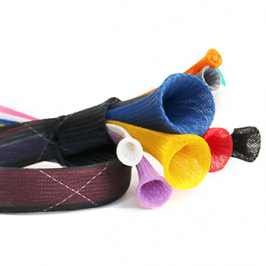
Braided sleeving for wires is a protective covering made of flexible, braided material designed to shield electrical wires and cables from damage. It’s commonly used in various industries, including automotive, electronics, and industrial applications, to provide physical protection, organization, and aesthetic enhancement to wiring systems.
Here are some key points about braided sleeving:
1. Material
Nylon: The most common type of braided sleeving is made from nylon, which is durable, flexible, and resistant to abrasion.
PET (Polyethylene Terephthalate): This is another option that is slightly more lightweight and offers good resistance to wear and tear.
Silicone: Some sleeving uses silicone for high heat resistance.
2. Features
Abrasion Resistance: Protects cables from friction, cuts, and impacts.
Heat Resistance: Some braids can withstand high temperatures, providing protection against heat in demanding environments.
Flexibility: Braided sleeving is very flexible, allowing cables to bend without compromising the protection.
Aesthetics: The braid is often used for organizing and improving the visual appeal of wiring.
Cable Organization: It helps to bundle cables neatly, reducing clutter and preventing tangling.
3. Applications
Automotive: Used to protect wiring in cars, trucks, and motorcycles, especially in areas with high heat and abrasion risks.
Electronics: In home or industrial electronics, braided sleeving is used to organize and protect cables within computers, audio equipment, and more.
Industrial: Often applied in heavy machinery and factory settings to prevent damage to cables from sharp objects, heat, or chemicals.
4. Types
Expandable Sleeving: This sleeving can stretch to accommodate varying sizes of cables, making it versatile for different cable thicknesses.
Non-expandable (Standard) Sleeving: This version does not stretch, so it’s more rigid but provides a secure fit for specific cable sizes.
Heat Shrink Sleeving: In some cases, braided sleeving is combined with heat shrink technology for extra protection, such as insulation against electrical shorts or heat.
5. Installation
Braided sleeving can usually be installed by sliding it over the cables or wires and cutting it to the desired length.
For extra security, cable ties or clips may be used to hold the sleeving in place at the ends.
Some braided sleeving may require additional tools for trimming or securing the ends.
Braided sleeving provides a clean, efficient, and durable way to protect wiring, making it a popular choice for both practical and aesthetic reasons.